


Lead Generation vs. Brand Awareness
Most service-based businesses think their biggest marketing problem is lead generation. They assume they need more leads, more ad spend, or another campaign to fix inconsistent growth. But in reality, many businesses are struggling with something deeper: visibility. If potential customers don’t recognize your company, trust your brand, or remember seeing you before they need your service, every lead becomes harder and more expensive to generate.
At Fierce, we see this happen constantly. Businesses pour money into Google Ads or lead generation campaigns expecting immediate results, only to watch cost-per-lead rise while lead quality declines. The natural reaction is to push even harder into lead generation, but that often creates a cycle where marketing starts feeling reactive instead of strategic. The problem usually isn’t that demand doesn’t exist — it’s that the business hasn’t built enough familiarity and trust before the buying moment happens.
The strongest marketing strategies don’t force businesses to choose between brand awareness and lead generation. They use both together. Brand awareness creates familiarity and trust before someone is ready to buy, while lead generation captures demand when that decision moment arrives. When those two strategies work together, businesses stop relying on random spikes in leads and start building a marketing system that creates more consistent, sustainable growth over time.
Demand Creation vs. Demand Capture
Every dollar you spend on marketing is doing one of two jobs:
It’s either creating demand or capturing it.
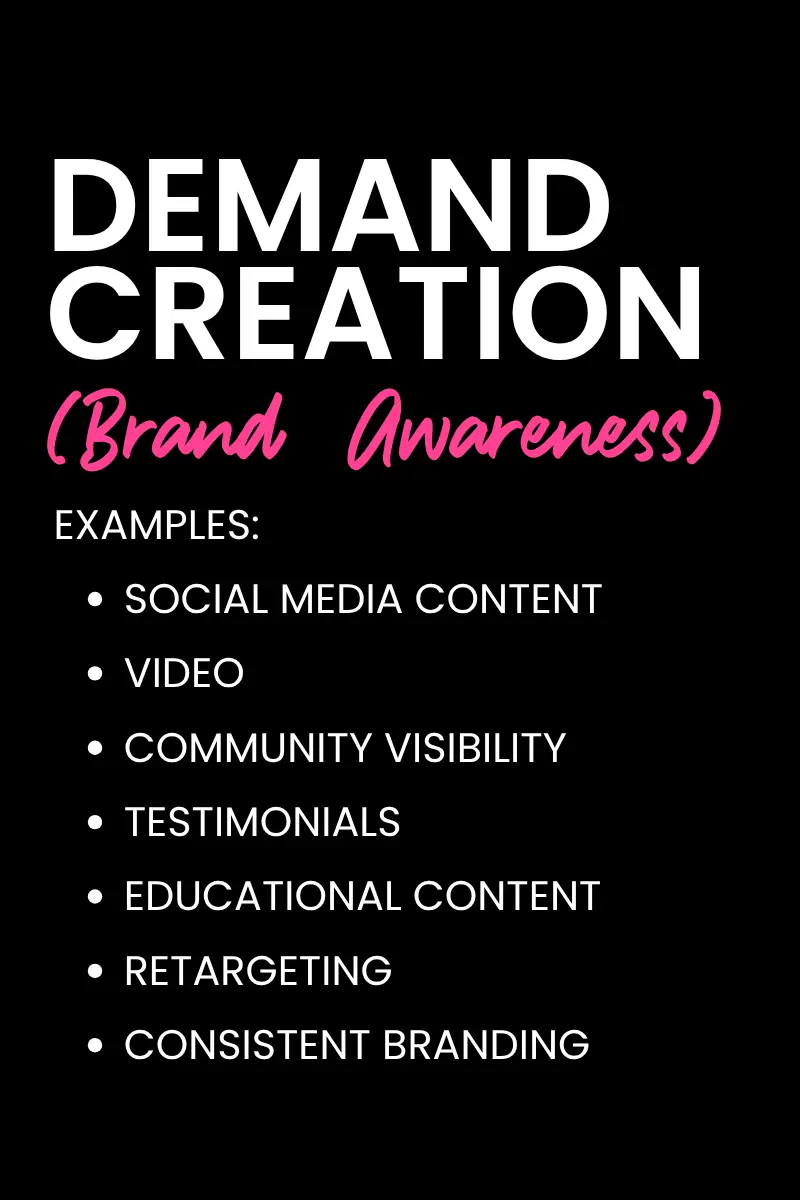
Demand Creation (Brand Awareness)
This is what builds recognition before someone needs you.
You’re:
- Building familiarity
- Shaping perception
- Establishing trust
- Staying visible
- Planting seeds before the buying moment happens
This includes:
- Social media content
- Video
- Community visibility
- Testimonials
- Educational content
- Retargeting
- Consistent branding
This is how people start saying:
- “I’ve seen your stuff before.”
- “You guys keep popping up.”
- “I feel like I already know you.”
That familiarity matters more than most businesses realize.
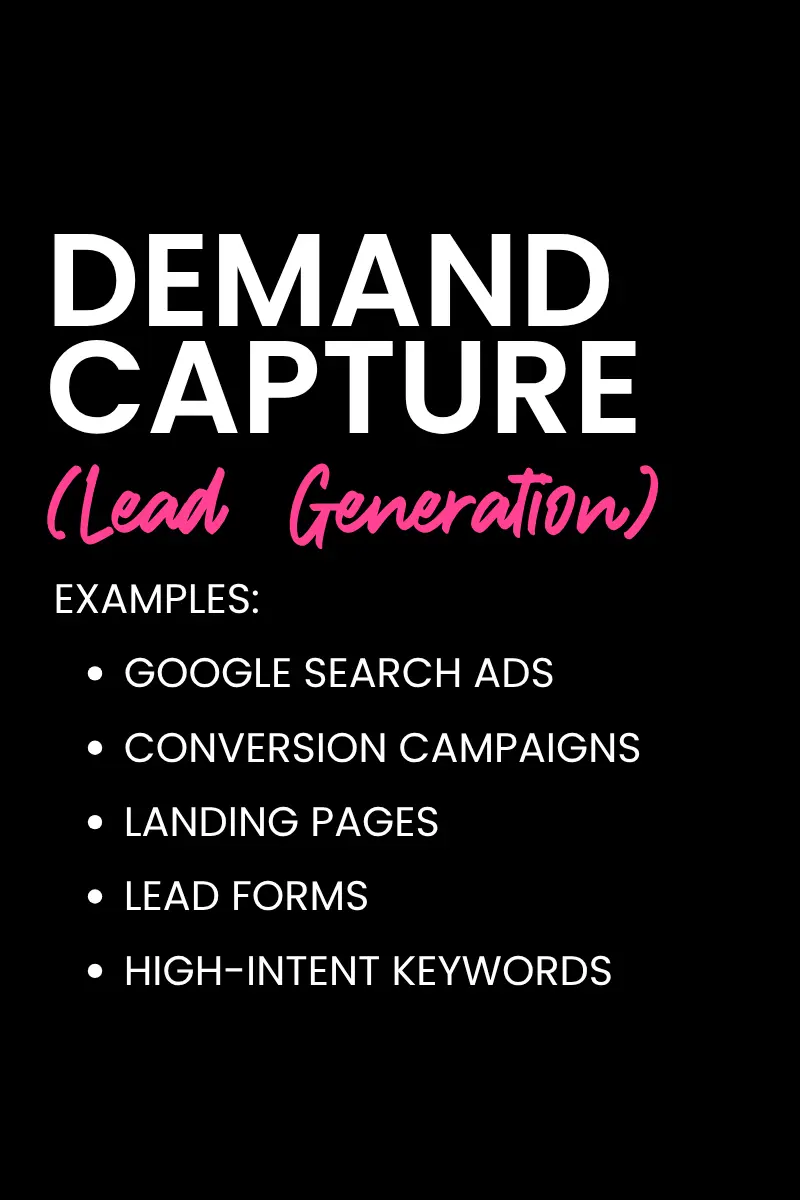
Demand Capture (Lead Generation)
This is what converts people already looking for a solution.
You’re:
- Showing up at the decision stage
- Converting existing demand
- Capturing high-intent traffic
This includes:
- Google Search Ads
- Conversion campaigns
- Landing pages
- Lead forms
- High-intent keywords
Both matter.
But they do completely different jobs.
And too many businesses fund them like they’re competing against each other.
“If you only focus on capture, you’re fighting over scraps.”
Why Lead Costs Keep Rising
The market is getting noisier.
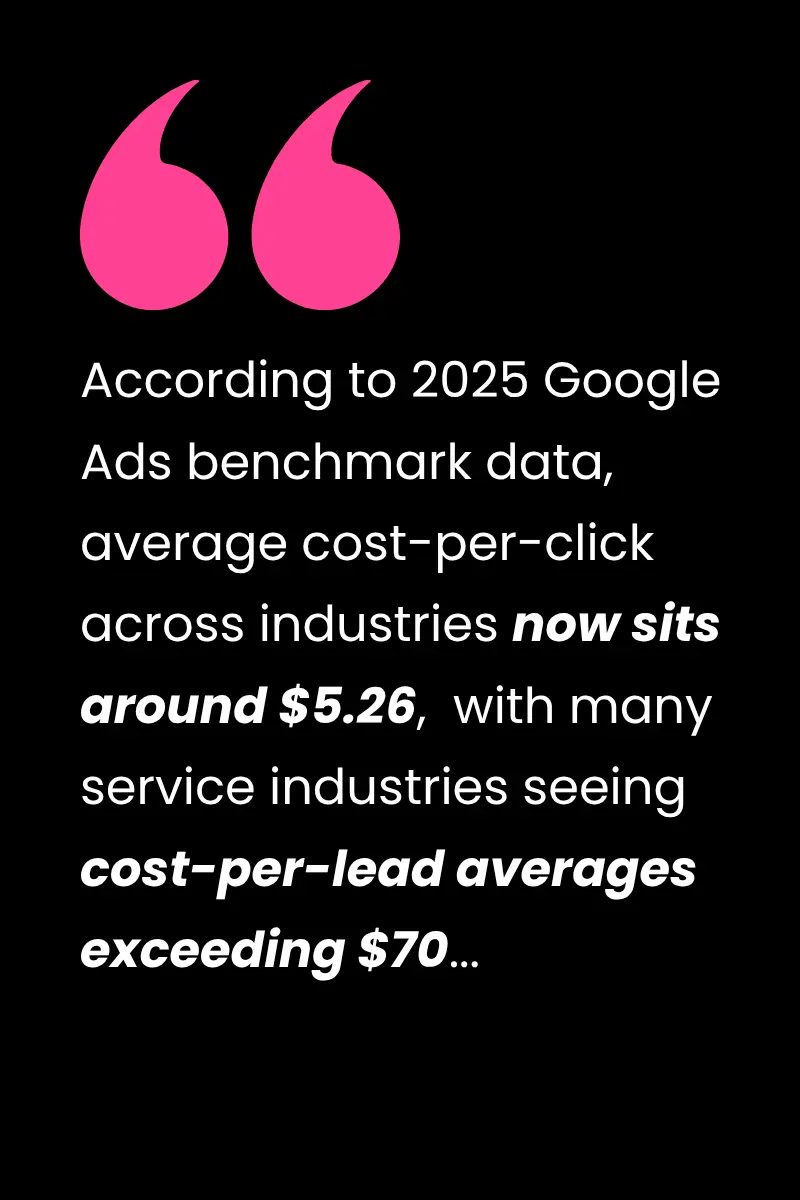
According to 2025 Google Ads benchmark data, average cost-per-click across industries now sits around $5.26, with many service industries seeing cost-per-lead averages exceeding $70 — and climbing year-over-year as competition increases.
Contractors, home service companies, and local service businesses are all competing for the same high-intent attention at the exact moment buyers are ready to act.
That’s the most expensive place to compete.
And if your company has no recognition before that moment, every click has to work harder.
That’s why businesses relying only on lead generation eventually hit a wall:
- Rising ad costs
- Lower-quality leads
- Inconsistent results
- Slower close rates
- Constant pressure to “feed the machine”
The cure starts feeling like the disease.
Why Most Businesses Get This Wrong
Three things usually push businesses into a leads-only mindset.
1. Short-Term Thinking
“I need leads now.”
That urgency gets louder than long-term strategy.
2. Budget Pressure
When margins tighten, the most measurable channels usually win. Brand awareness gets cut first because it doesn’t always show immediate attribution.
3. Misunderstanding Attribution
Brand awareness rarely gets full credit on a dashboard.
But it quietly improves everything:
- Click-through rates
- Conversion rates
- Referral activity
- Branded searches
- Sales conversations
- Customer trust
“When brand awareness is missing, lead generation gets more expensive and less effective.”
Brand Awareness Changes the Math
This is where skeptics usually come around.
Brand awareness isn’t a “vibes” strategy.
It directly improves paid ad performance.
When people recognize your company:
- CTR increases
- CPC often decreases
- Conversion rates improve
- Retargeting performs better
- Sales conversations move faster
Why?
Because familiarity lowers resistance.
Consumers trust what feels familiar.
And advertising platforms reward engagement.
According to recent advertising benchmark reports, campaigns with stronger engagement and higher click-through rates often generate lower long-term acquisition costs over time.
In simple terms:
Familiarity converts faster than persuasion.
What This Looks Like in Real Life
A homeowner sees your roofing company on Facebook.
A few weeks later, they watch one of your videos.
Later, they see a testimonial ad.
Then a storm hits.
Now they search Google.
When your company appears, you are no longer a stranger.
You’re familiar.
And familiarity usually wins.
That’s the difference between building visibility and constantly chasing cold leads.
Stop Letting Brand and Lead Gen Compete
One of the biggest mistakes businesses make is treating brand awareness and lead generation like rivals.
They’re not competitors.
They’re partners.
Here’s the framework we typically recommend:
Early Stage
Lean heavier into lead generation.
Roughly 70/30.
You need pipeline and immediate traction.
Growth Stage
Move toward balance.
60/40 or 50/50.
This is where brand starts compounding.
Scaling Stage
A strong brand presence fuels everything else.
Your ads perform better.
Your referrals improve.
Your close rates increase.
Your costs stabilize.
“You don’t need more budget. You need better allocation.”
Build a Marketing System — Not Random Tactics
Most marketing problems are not channel problems.
They’re strategy problems.
Too many businesses have disconnected marketing:
- Social media saying one thing
- Ads saying another
- No retargeting
- No follow-up
- No consistency
The strongest marketing systems feel connected.
Top of Funnel (Awareness)
- Social media
- Video content
- Meta ads
- Community visibility
Middle of Funnel (Trust Building)
- Retargeting
- Testimonials
- Email marketing
- Educational content
Bottom of Funnel (Lead Capture)
- Google Ads
- Conversion campaigns
- Landing pages
- Search campaigns
Your marketing shouldn’t feel disconnected.
It should feel like a journey.
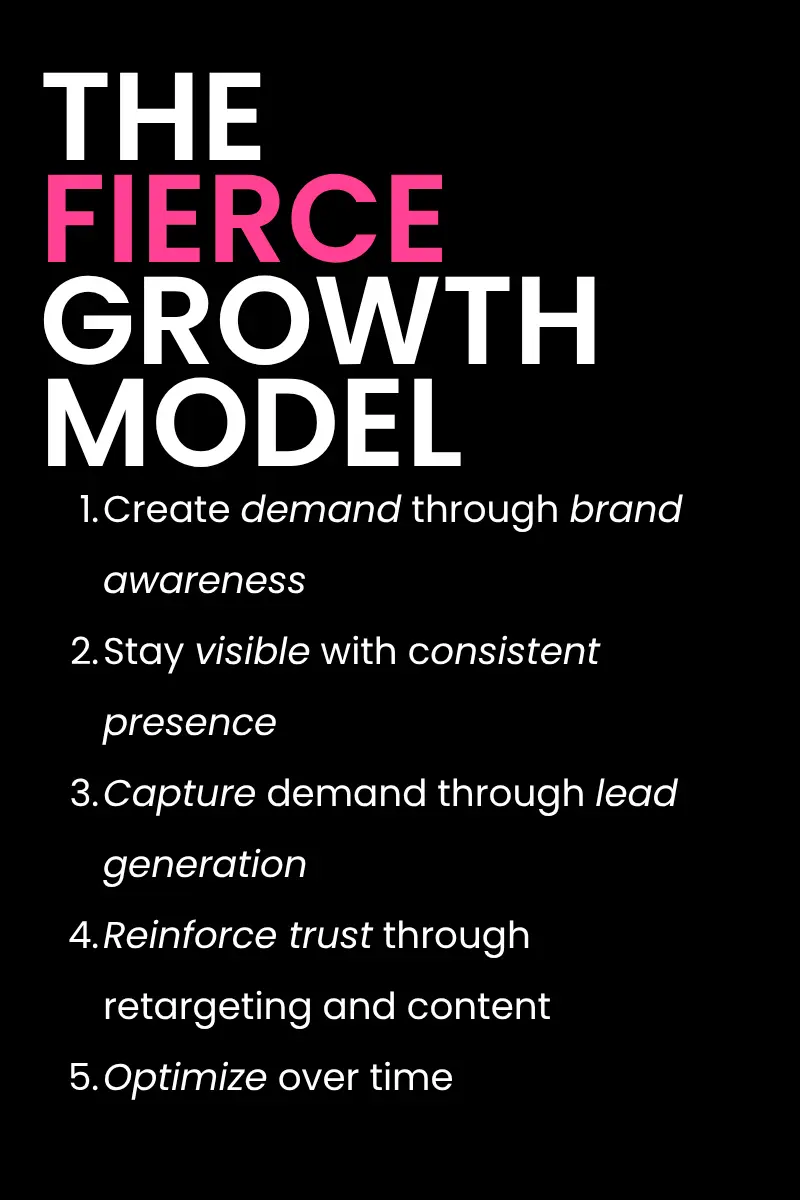
The Fierce Growth Model
This is the framework we believe sustainable service-business growth is built on:
- Create demand through brand awareness
- Stay visible with consistent presence
- Capture demand through lead generation
- Reinforce trust through retargeting and content
- Optimize over time
This is how you grow now and later.
The Mindset Shift
If you only focus on leads:
- You stay reactive
- You stay inconsistent
- You stay dependent on constantly buying attention
You’re always one slow week away from a fire drill.
But when you build both visibility and lead generation:
- You create stability
- You lower acquisition costs over time
- You improve lead quality
- You build trust before the sales call
- You grow with intention
Stop choosing between short-term results and long-term growth.
Build a strategy that does both.
Want Help Building a Smarter Marketing Mix?
At Fierce Creative Solutions, we help service-based businesses build marketing systems that create demand and capture it — so growth stops feeling random.
Because most of the time, inconsistent leads aren’t the root problem.
Lack of visibility is.